Navigating the Next Frontier: Key Trends Shaping the Gaming Industry’s Future
The gaming industry, a powerhouse of innovation and entertainment, continues its relentless evolution, pushing boundaries and redefining how we interact with digital worlds. Far from being a niche hobby, video games have cemented their status as a dominant cultural and economic force, consistently outperforming other entertainment sectors. This dynamic landscape is perpetually shaped by emerging technologies, shifting consumer behaviors, and novel business models, making it one of the most exciting and unpredictable sectors to observe. Staying abreast of the latest gaming news is crucial for developers, investors, and enthusiasts alike, as what’s cutting-edge today can quickly become mainstream tomorrow.
From the early arcade cabinets to today’s hyper-realistic virtual worlds, the journey has been nothing short of spectacular. We’ve witnessed a paradigm shift from solitary experiences to vast online multiplayer universes, from pixelated sprites to cinematic narratives. The industry’s growth trajectory shows no signs of slowing, fueled by an ever-expanding global audience and an insatiable appetite for new experiences. Understanding the prevailing trends is not just about foresight; it’s about recognizing the very fabric of future entertainment.

The Rise of Immersive Technologies: VR, AR, and Haptics
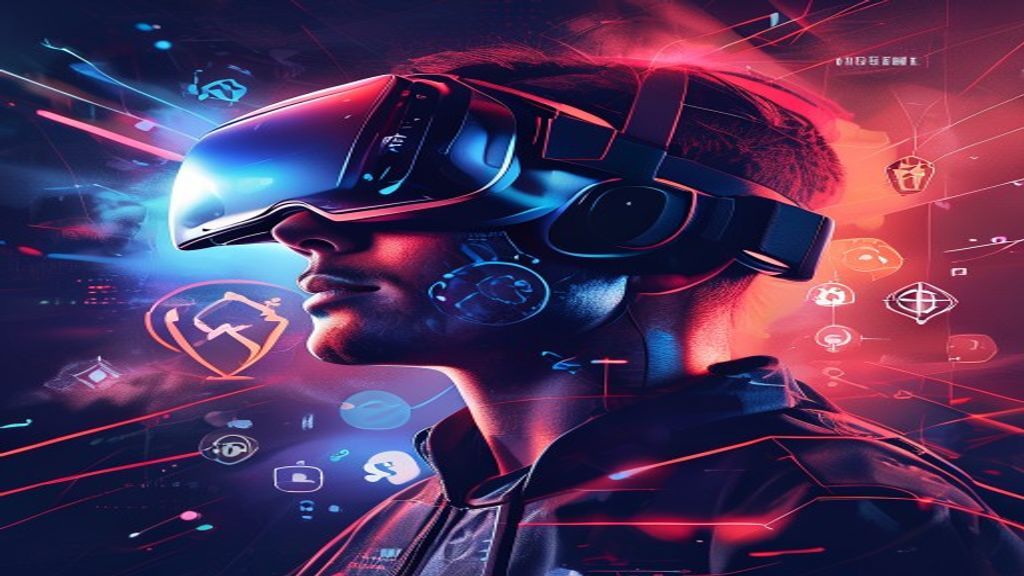
Immersive technologies are no longer the stuff of science fiction; they are rapidly becoming integral to the gaming experience. Virtual Reality (VR) and Augmented Reality (AR) stand at the forefront of this revolution, promising unprecedented levels of player engagement and sensory input. These technologies are not just about visual fidelity; they are about transporting players into new realities or seamlessly blending digital elements with our physical world, thereby transforming how we perceive and interact with video games.
Virtual Reality’s Expanding Horizons
VR gaming has matured significantly in recent years, moving beyond nascent experimental stages to deliver truly compelling experiences. With advancements in hardware like lighter, untethered headsets and more powerful processing, the barriers to entry are steadily decreasing. Games like Half-Life: Alyx have demonstrated the storytelling and gameplay potential unique to VR, proving it’s not just a gimmick but a powerful new medium. Social VR platforms are also gaining traction, allowing players to connect and interact in shared virtual spaces, blurring the lines between gaming and social networking. The future of VR points towards even greater immersion, with haptic feedback suits and advanced motion tracking promising to engage nearly all senses.
Augmented Reality’s Everyday Integration
While VR seeks to fully immerse, AR integrates digital content into the real world. Mobile AR games like Pokémon Go proved the immense mass-market appeal of this technology. However, AR’s potential extends far beyond smartphone screens. As AR glasses become more sophisticated and aesthetically pleasing, we can anticipate a future where games and interactive experiences are layered directly onto our daily lives, transforming public spaces into playgrounds and ordinary objects into interactive elements. Imagine strategy games played on your living room table or cooperative adventures unfolding in your local park – AR promises to make the world itself a canvas for gaming.
Esports’ Unstoppable Ascent: Professionalizing Play
The phenomenon of esports has exploded from niche online communities to a global spectator sport rivaling traditional athletics. Millions tune in to watch professional gamers compete for multi-million dollar prize pools, and dedicated arenas now host sold-out events. This trend is a testament to the competitive nature inherent in video games and the power of organized play.
Professionalizing Gaming
What began with passionate amateurs has evolved into a highly structured industry with professional organizations, coaches, analysts, and rigorous training regimens. Players are becoming bona fide celebrities, complete with lucrative sponsorship deals and massive fan bases. Universities are even offering esports scholarships, legitimizing competitive gaming as a viable career path. This professionalization has attracted significant investment, solidifying esports‘ position as a major player in the global entertainment economy.
The Spectator Experience
The success of esports is deeply intertwined with its compelling spectator experience. Platforms like Twitch and YouTube Gaming have made watching live and archived tournaments incredibly accessible, allowing fans to engage with their favorite teams and players on a deeply personal level. The high production values of major tournaments, complete with expert commentary, instant replays, and analytical overlays, mimic and often surpass traditional sports broadcasts. This blend of competitive drama and interactive community engagement ensures that esports will continue to attract a growing audience and remain a hot topic in gaming news.
Cloud Gaming: Accessibility Redefined
Cloud gaming, or game streaming, is poised to democratize access to high-fidelity video games, eliminating the need for expensive hardware. Services like Xbox Cloud Gaming, GeForce Now, and PlayStation Plus Premium allow players to stream games directly to almost any device with an internet connection, from smartphones and tablets to smart TVs and low-end laptops. This fundamental shift in distribution and consumption marks a significant trend in the industry.
Streaming’s Convenience Factor
The allure of cloud gaming lies in its unparalleled convenience. No downloads, no installations, no hardware upgrades – simply pick up a device and play. This removes significant barriers for casual players and opens up premium gaming experiences to a much wider audience. For developers, it means their creations can reach players across a multitude of platforms without complex porting processes, potentially expanding their market reach exponentially.
Infrastructure and Latency Challenges
Despite its promise, cloud gaming faces considerable technical hurdles, primarily surrounding internet infrastructure and latency. A stable, high-bandwidth connection is essential for a smooth, lag-free experience. As providers continue to expand their server networks and develop more efficient streaming technologies, these challenges are steadily being addressed. The ongoing rollout of 5G networks and improved edge computing are critical enablers for cloud gaming to achieve its full potential, making it a recurring theme in technological gaming news.

The Impact of AI and Machine Learning: Smarter Games
Artificial Intelligence (AI) and Machine Learning (ML) are quietly revolutionizing every aspect of the gaming industry, from development and gameplay to player personalization. These technologies are making games smarter, more dynamic, and more engaging than ever before.
Enhancing Gameplay and NPCs
At the core, AI is driving more sophisticated Non-Player Characters (NPCs), leading to more believable enemies, allies, and open-world inhabitants. NPCs can exhibit more complex behaviors, adapt to player strategies, and even learn over time, creating unpredictable and challenging encounters. Beyond character intelligence, AI is also being used to generate dynamic content, create more realistic physics, and even proceduralize entire game worlds, offering infinite replayability and unique experiences for every player. This allows for a richer and more varied experience in video games.
Personalization and Content Creation
Machine learning algorithms are increasingly adept at analyzing player data to offer personalized content recommendations, adaptive difficulty adjustments, and tailored in-game experiences. This means games can intuitively respond to individual playstyles, keeping players engaged longer. Furthermore, AI tools are accelerating game development, assisting with asset creation, animation, and testing, potentially reducing production costs and timelines. The integration of AI in content creation means more diverse and fresh gaming news surrounding new titles and updates.
Web3 and Blockchain Integration: Digital Ownership and Play-to-Earn
The emergence of Web3 technologies, including blockchain, NFTs (Non-Fungible Tokens), and cryptocurrencies, is a highly debated but significant trend impacting the gaming industry. These technologies promise to shift power dynamics, offering players true digital ownership and new economic models.
NFTs, Play-to-Earn, and Digital Ownership
Blockchain technology enables verifiable digital ownership through NFTs, allowing players to truly own in-game assets, trade them, and potentially even transfer them between different games. This concept underpins the "play-to-earn" (P2E) model, where players can earn cryptocurrency or NFTs by playing games, creating new economic opportunities within virtual worlds. While still in its early stages and facing scrutiny, the potential for decentralized economies within video games is immense, redefining the relationship between players and game developers.
Decentralized Gaming Ecosystems
Beyond individual assets, blockchain is also facilitating the development of decentralized gaming ecosystems. These platforms aim to give players and communities more say in game development, governance, and monetization through decentralized autonomous organizations (DAOs). This move towards community-driven development could foster greater transparency and innovation, potentially leading to games that evolve in direct response to player input, creating a wealth of interesting gaming news stories.
Diverse Gaming Audiences and Accessibility
The demographic profile of gamers has broadened dramatically, moving far beyond the stereotypical young, male enthusiast. Today’s gaming audience is incredibly diverse, encompassing all ages, genders, and backgrounds. This shift is driving demand for more inclusive game design and greater accessibility features.
Gaming for Everyone
Mobile gaming has played a pivotal role in expanding the audience, bringing casual and mid-core experiences to billions worldwide. However, even traditional console and PC gaming has seen a diversification in its player base, with more women and older adults engaging regularly. This growing diversity demands a wider variety of genres, themes, and narratives in video games, moving away from historically narrow portrayals.
Inclusive Design Principles
In response to this expanding audience, game developers are increasingly prioritizing accessibility. Features like customizable controls, colorblind modes, adjustable text sizes, haptic feedback options, and sophisticated difficulty scaling are becoming standard. Companies are also investing in adaptive controllers and fostering communities around inclusive gaming, ensuring that people with disabilities can enjoy video games to their fullest. This commitment to accessibility not only broadens the market but also enriches the experience for all players, setting a positive precedent for the industry.
The Future of Monetization and Engagement
How video games generate revenue and retain player interest is constantly evolving, with new models emerging to complement traditional sales. These trends reflect a shift towards ongoing engagement and services rather than one-time purchases.
Subscription Models and Battle Passes
Subscription services, similar to those in film and music, are gaining immense traction in gaming. Platforms like Xbox Game Pass offer extensive libraries for a monthly fee, providing incredible value and encouraging players to try a wider variety of games. Battle Passes, popular in live-service games, provide a structured progression system with cosmetic rewards, keeping players invested over long periods. These models emphasize continuous engagement and community building, becoming central to many games’ long-term strategies.
User-Generated Content and Modding Communities
The power of user-generated content (UGC) and robust modding communities cannot be overstated. Games that empower players to create their own levels, characters, stories, or even entirely new gameplay experiences often enjoy extended lifespans and foster incredibly loyal fanbases. Titles like Minecraft, Roblox, and various Bethesda games demonstrate how UGC can endlessly refresh content and provide new reasons for players to return. Developers are increasingly recognizing and integrating tools for UGC, leveraging player creativity as a powerful engagement and marketing tool, often leading to viral gaming news stories.

Conclusion: A Future of Infinite Possibilities
The gaming industry stands on the precipice of an exhilarating future, continually reshaped by a confluence of technological advancements and evolving player expectations. From the deep immersion offered by VR and AR, the competitive spectacle of esports, and the accessibility revolution of cloud gaming, to the intelligent design powered by AI and the economic shifts promised by Web3, the landscape is richer and more complex than ever. These trends are not isolated; they often intersect and amplify each other, creating synergistic effects that drive even greater innovation. Staying informed through the latest gaming news is key to understanding this vibrant and ever-changing ecosystem. As we look ahead, one thing is clear: the world of video games will continue to surprise, entertain, and connect us in ways we can only just begin to imagine.
Leave a Reply