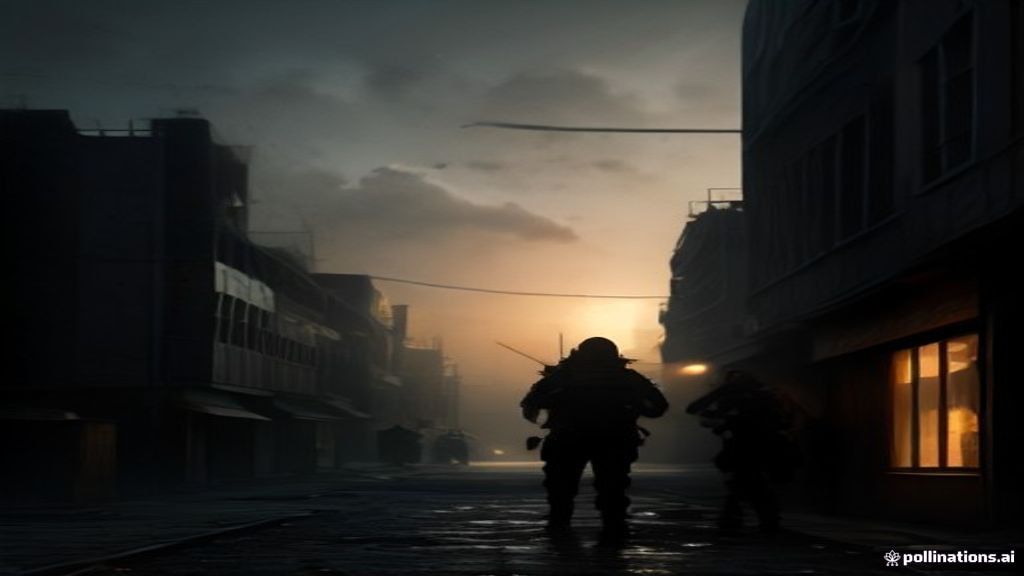
Editor’s Note: As Call of Duty continues its rapid evolution, particularly with its latest iteration, understanding the nuances of its multiplayer offering is crucial. This review-style breakdown aims to provide a clear, honest assessment for any player, old or new, trying to decide if the current Call of Duty multiplayer experience is right for them amidst its constant updates and seasonal shifts.
Deconstructing Call of Duty’s Multiplayer Experience: Strengths, Struggles, and Who It’s For
Are you a long-time Call of Duty veteran feeling the shifts in the landscape, or perhaps a new player trying to understand what makes this gaming behemoth tick? This deep dive is for you. We’re cutting through the noise to give you an honest, no-holds-barred look at the current Call of Duty multiplayer experience. Forget the marketing hype; we’ll break down its core strengths, reveal the persistent struggles, and ultimately help you decide if this is where you should be spending your precious gaming hours.
The Enduring Core: Precision Gunplay and Responsive Movement
At its heart, Call of Duty has always prided itself on immediate, impactful combat, and the current multiplayer experience largely delivers on this promise. The moment-to-moment gunplay remains exceptionally satisfying, a testament to decades of refinement. Each weapon category feels distinct, from the weighty punch of an LMG to the snappy precision of a submachine gun. The time-to-kill (TTK) is often debated, but it consistently aims for a fast-paced engagement model, rewarding quick reflexes and accurate aim. When you’re locked in a duel, every bullet counts, making those clutch plays feel incredibly earned.
Movement systems, too, have seen significant iteration. The ability to slide cancel, tactical sprint, and mantle over obstacles at speed creates a highly fluid and dynamic battlefield. This isn’t a static shooting gallery; it’s a constant dance of positioning, flanking, and reacting. Players who master the intricate dance of movement, combining it with their aim, unlock a significant advantage. The responsiveness of controls means that your input translates almost instantaneously to on-screen action, a critical factor for any competitive shooter. This foundational layer of polished gunplay and fluid movement is undoubtedly the game’s greatest strength, providing a visceral feedback loop that keeps players returning match after match.
However, this high-fidelity experience isn’t without its caveats. While the core gunplay is excellent, weapon balancing can sometimes swing wildly with patches, leading to periods where a handful of ‘meta’ weapons dominate every lobby. This can stifle experimentation and force players into narrow loadout choices if they wish to remain competitive. Yet, when the balance is right, the sheer variety of viable weapons and attachments allows for an incredible depth of personalization, empowering players to craft a tool that perfectly suits their individual playstyle.

Map Design: The Double-Edged Sword of Familiarity
One of the more contentious aspects of recent Call of Duty titles has been the approach to map design, particularly the reliance on remasters and fan-favorite maps from previous eras. While this provides a potent dose of nostalgia for long-time players, it also presents a double-edged sword. On one hand, these maps are often excellent, refined designs that have stood the test of time, offering balanced lanes, strategic choke points, and varied combat scenarios. Maps like Shipment or Rust, for instance, guarantee pure, unadulterated chaos, while others like Highrise or Terminal offer more tactical engagements.
However, the constant recycling can lead to a sense of stagnation. For players hoping for fresh environments and new tactical challenges, seeing the same maps year after year, even with graphical updates, can feel uninspired. This isn’t to say innovation is entirely absent; new maps are introduced periodically, often showcasing diverse locations and interesting verticality. Yet, they sometimes struggle to capture the immediate ‘classic’ feel of their predecessors, occasionally suffering from confusing layouts or overly complex sightlines that don’t always facilitate the fast-paced flow CoD is known for.
The flow of play within these maps is also a critical factor. Good map design guides players naturally into engagements while offering options for flanking and evasion. Poor design, however, can lead to frustrating spawn traps, overly exposed areas, or dead zones where action rarely happens. The current iteration often walks this line, with some maps excelling and others occasionally falling short. The key takeaway here is that while the map pool boasts some legendary battlegrounds, the balance between venerated classics and genuinely new, impactful designs is an ongoing struggle that significantly impacts the overall multiplayer experience.
Progression, Customization, and the Perpetual Grind
Call of Duty has perfected the art of player engagement through its robust progression and customization systems. The Gunsmith system, in particular, is a standout feature. It allows for an unprecedented level of weapon modification, with dozens of attachments for nearly every weapon, each altering stats like recoil, range, aim-down-sight speed, and ergonomics. This depth empowers players to fine-tune their weapons for specific playstyles or map types, fostering a genuine sense of ownership over their loadouts. The grind to unlock these attachments, as well as weapon camos, mastery skins, and operator outfits, provides a constant carrot on a stick, encouraging continued play.
Beyond weapon progression, the overarching battle pass system and seasonal challenges offer a structured path for earning cosmetics and bonus XP. While the monetization model heavily features purchasable bundles, the free tiers of the battle pass, coupled with in-game challenges, ensure that even free-to-play users have a steady stream of rewards to pursue. This constant drip-feed of progression elements is a massive strength, providing a satisfying sense of accomplishment beyond simply winning matches. Whether you’re chasing the latest reactive camo, unlocking a new operator skin, or perfecting a weapon’s attachment setup, there’s always a goal to strive for, keeping the gaming experience fresh and rewarding.
The Invisible Hand: Matchmaking and Player Experience Woes
Perhaps the most discussed and debated aspect of modern Call of Duty is the implementation of Skill-Based Matchmaking (SBMM). While designed to create balanced lobbies, its aggressive nature often leads to a highly inconsistent and frequently frustrating player experience. For many, every match feels like a grand finals esports event, with little room for casual relaxation or experimentation. The moment you perform well, the system quickly elevates you to lobbies filled with equally skilled or even superior players, often leading to a ‘sweaty’ environment where every mistake is punished.
This relentless balancing act can create a feedback loop where players feel unable to improve organically or enjoy a diverse range of outcomes. Casual players might get crushed repeatedly, while highly skilled players might struggle to find truly varied or less intense matches. This isn’t just about skill; it also frequently impacts connection quality. The system prioritizes skill over ping, leading to instances where players are matched across wider geographical distances, resulting in noticeable latency and a less responsive experience. This constant fight against the matchmaking algorithm, coupled with occasional netcode issues and server instability, can severely detract from the otherwise excellent core gameplay, transforming what should be a fun diversion into a constant uphill battle.

What Most Players Get Wrong: Beyond K/D and Ignoring Objectives
One of the most pervasive misconceptions in Call of Duty multiplayer is that K/D ratio is the sole metric of success. While important for personal pride and often indicative of skill, hyper-focusing on kills at the expense of objective play is a common mistake that severely impacts team performance and, ultimately, game enjoyment. Call of Duty’s core game modes are not merely deathmatches; they are objective-based skirmishes.
Here’s what many players miss:
- Ignoring Objectives: In modes like Hardpoint, Domination, or Headquarters, holding the objective is paramount. A player with fewer kills but significant objective time often contributes far more to the win than a slayer who ignores the flags. The game incentivizes objective play with bonus XP, yet many neglect it.
- Rigid Playstyles: Sticking to one weapon or one corner of the map, regardless of the situation, is a recipe for frustration. The best players adapt. If the enemy team is camping power positions with LMGs, pushing aggressively with an SMG might be futile. Switching to a sniper or a long-range AR and flanking could be the key.
- Poor Loadout Management: Many players stick to a single, ‘balanced’ loadout for all situations. Smart players tailor their classes. Need to break a heavily defended objective? A smoke grenade and a shotgun might be more effective than your standard AR. Dealing with annoying air streaks? A launcher is essential. Not optimizing your perks for different maps or modes is another common misstep.
- Lack of Communication (Even in Pings): Even without voice chat, using the in-game ping system to mark enemies, objectives, or danger zones can dramatically improve team coordination. Most players ignore this simple, yet effective tool.
Understanding that Call of Duty is a game of dynamic objectives and team synergy, not just individual kill counts, is a fundamental shift that can dramatically elevate a player’s experience and success.
Frequently Asked Questions About Current Call of Duty Multiplayer
Q1: Is SBMM ruining the game for casual players?
A1: For many casual players, yes, the current implementation of Skill-Based Matchmaking (SBMM) can make the game feel consistently ‘sweaty’ and less relaxing. It attempts to create fair matches, but often results in every game feeling like a high-stakes competitive match, which can be exhausting if you just want to unwind. Its impact is one of the most significant concerns for a large portion of the player base.
Q2: What’s the best way to level up weapons quickly?
A2: The most efficient way to level up weapons is by playing objective-based game modes (like Hardpoint or Domination) and actively participating in the objective. Capturing points, holding positions, and getting kills while on or near objectives grant significant bonus XP. Utilizing Double XP tokens, completing daily/weekly challenges, and playing during seasonal XP events also accelerate the process. Equipping the weapon you want to level in Warzone/DMZ and completing contracts or fighting AI can also be very effective.
Q3: How can I improve my aim and movement?
A3: Consistent practice is key. For aim, start by adjusting your sensitivity to a comfortable level – don’t just copy pros; find what works for you. Spend time in the firing range to test recoil patterns and practice snap aiming. Play slower, more tactical modes initially to focus on precision. For movement, watch skilled players, practice slide-canceling, and learn effective mantle points on maps. Integrating movement into your engagements to break enemy sightlines is crucial.
Q4: Should I buy the Battle Pass?
A4: Whether to buy the Battle Pass depends on your play frequency and desire for cosmetics. If you play regularly and typically complete a significant portion of the pass, it often offers good value with new operator skins, weapon blueprints, and XP boosts. Crucially, if you complete the pass, you usually earn enough CoD Points to buy the next one for free, making it a worthwhile investment for dedicated players. If you play sporadically, it might not be worth it.
Conclusion: Is Modern Call of Duty for You?
The current Call of Duty multiplayer experience is a complex beast, offering some of the most refined and satisfying first-person shooter gunplay on the market, backed by deep customization and an engaging progression system. When it fires on all cylinders, it provides an unparalleled adrenaline rush that few other gaming titles can match. The core mechanics are undeniably strong, making every gunfight feel impactful and every precise shot rewarding.
However, it’s also an experience plagued by persistent issues. The controversial Skill-Based Matchmaking often creates an exhausting ‘sweaty’ environment, making casual play difficult and leading to inconsistent lobby quality. The reliance on familiar maps, while nostalgic, can sometimes feel creatively stagnant, and the monetization strategy, while offering a clear path for progression, heavily pushes premium content.
So, who is it for?
- Competitive Enthusiasts: If you thrive on constant challenges, love refining your skills against equally matched opponents, and appreciate deep weapon customization, you’ll likely find a home here. The relentless nature of SBMM will push you to improve.
- Dedicated Grinders: If you enjoy the satisfaction of unlocking every camo, leveling up every weapon, and completing battle passes, the robust progression system will keep you engaged for hundreds of hours.
- Casual Players with Adaptable Mindsets: If you can temper your expectations regarding lobby consistency and are willing to experiment with different game modes and loadouts, you can still find fun. Focus on objective play and personal improvement rather than just K/D.
If you’re looking for a purely casual, no-stress shooter where you can consistently dominate without effort, you might find the current CoD multiplayer frustrating. But for players who embrace the grind, the competition, and the continually evolving meta, Call of Duty remains a powerful, engaging, and often exhilarating video game experience.
Your next action should be to consider what you prioritize most in a shooter. If the strengths outweigh the struggles for your playstyle, then dive in. The battlefield is waiting.
Leave a Reply